
Educational Services · Reading & Dyslexia Support
Structured Reading & Writing Tutoring for Dyslexia in Plano
Individualized reading and dyslexia intervention, sometimes called academic language therapy, for students from kindergarten through high school.
If your child guesses at words, avoids reading aloud, or reads fine but doesn’t seem to “get” what they’ve read, every program here is matched to your child’s specific need, delivered under direct CALT-QI supervision.
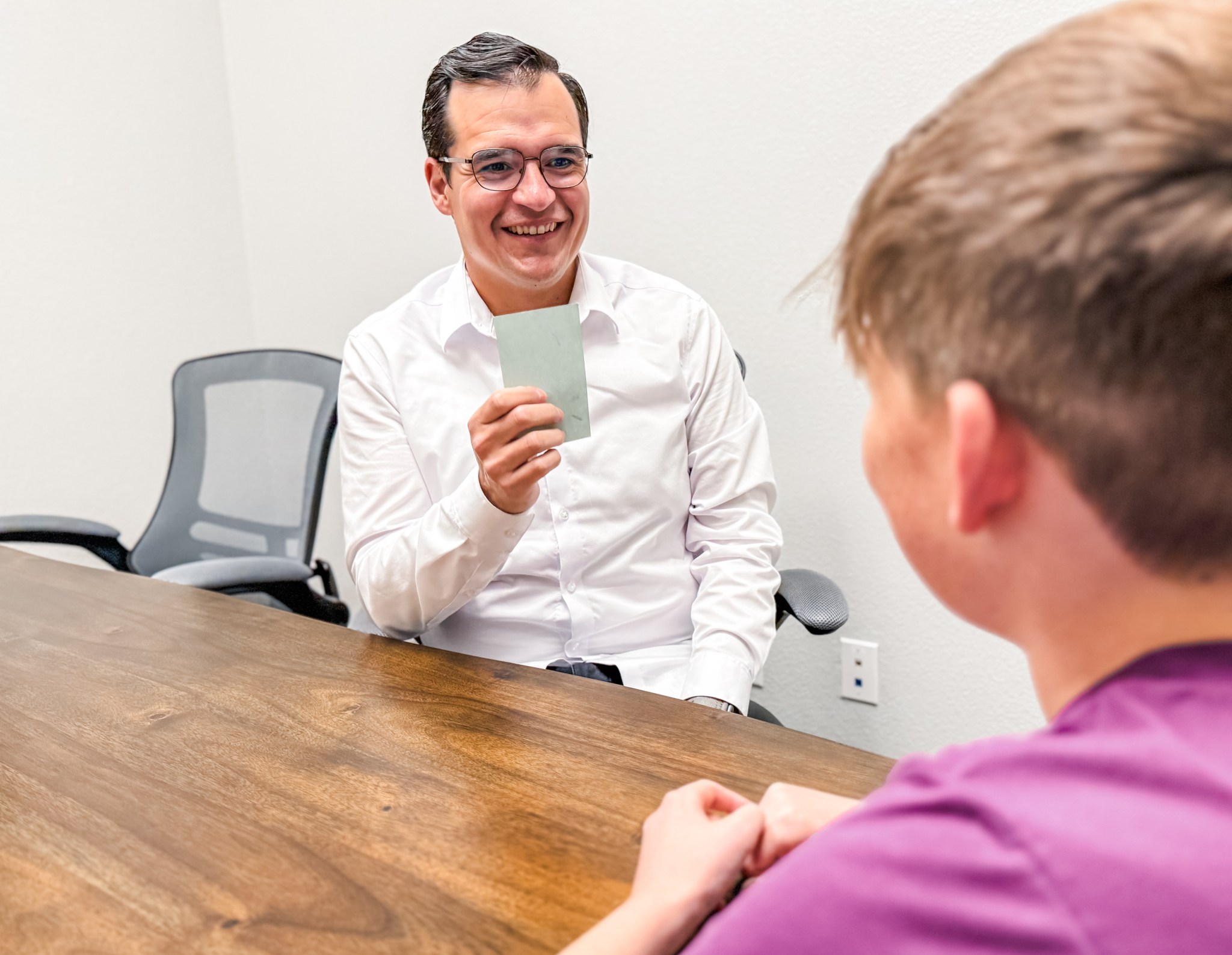
You don’t have to know which one. What your child needs shapes how we spend our time together.
That decision starts with a short screening, done in our very first session together, using established, published reading tools, not a guess from conversation alone.
How We Match the Right Kind of Help to Your Child
Not every struggling reader needs the same thing, and “reading help” isn’t one thing. Some kids need to learn how to sound out and spell words in a clear, structured, step-by-step way. A smaller group (kids with dyslexia) need that same kind of instruction, but more of it: more days a week, more one-on-one focus. And some kids can already read the words on the page but don’t hold onto the meaning, or have plenty to say out loud yet can’t get it onto paper. Those are genuinely different needs, so we offer three kinds of help. We start by figuring out which one your child needs, then match the kind of help, the program, and the pace to that answer, not the other way around.
Reading science backs this split: reading comprehension is decoding (sounding out words) working together with language comprehension (understanding them). A child can be strong in one and still get stuck, so the two need different kinds of instruction.
Dyslexia Therapy with MTA
Your child works one-on-one with Michael using MTA, a structured, multisensory literacy program built specifically for students with dyslexia. Sessions run 50–60 minutes several times a week, teaching reading, spelling, and handwriting together through sight, sound, touch, and movement.
Signs this may be the right fit
- Sounding out unfamiliar words is a real, ongoing struggle, not just an occasional stumble.
- Your child guesses at words from the first letter or the picture, and leans on memorizing whole words instead.
- Reading aloud gets avoided, sometimes to sidestep the embarrassment of it.
- Reading is slow and effortful, and spelling stays hard even after practice.
- The gap hasn’t closed with regular classroom help or lighter tutoring.
- There’s already a dyslexia evaluation, or a family history and pattern that point clearly that way.
Sessions & fee: 4–5 short one-on-one sessions a week, by design (the frequency the program recommends for fidelity). After-school life is real, though: kids have activities, families have schedules, and you have the final say on what your week can hold. We’ll be straight about what a lighter week means for pace: we won’t promise the same results at reduced intensity, but we’ll work with what your family can sustain. $75 per session.
Reading & Spelling Instruction
Your child gets explicit, step-by-step lessons in phonics and spelling, built around exactly which sounds and patterns still feel shaky. Session pace and frequency are matched to how big the gap is, not a fixed class schedule.
Signs this may be the right fit
- Your child has trouble sounding out words, guesses often, or avoids reading aloud.
- Rhyming, hearing the separate sounds in a word, or blending sounds together is hard.
- Reading takes so much effort that understanding the sentence gets lost.
- Your child is behind on reading and spelling, but there’s no dyslexia diagnosis or clear dyslexia profile, and the gap looks like one targeted, structured tutoring can close.
Sessions & fee: More flexibility and fewer sessions a week than recommended MTA programming, set to what your child’s gap calls for, decided together after screening. $60 per session.
Comprehension & Writing Support
Your child works on holding onto what they read and getting their ideas onto the page, through conversation-style reading practice, vocabulary building, and a clear, step-by-step process for planning and writing. Handwriting and spelling get direct attention too, so there’s more room left for the thinking part of writing.
Signs this may be the right fit
- Your child reads aloud just fine but can’t recall the details, the order of events, or the main point afterward.
- They struggle to retell a story in a way that makes sense.
- They can tell you a whole idea out loud, but it barely makes it onto the page.
- Starting, organizing, or finishing a piece of writing is where it falls apart.
Sessions & fee: A cadence set to your child’s need, decided together after screening. $65 per session.
A note on overlap: kids don’t always fit one clean box. A child might start with focused work in one area and add another as they progress (for example, closing a decoding gap first, then shifting to comprehension and writing). The approach itself never changes from card to card: it is structured literacy throughout. What changes is where we aim it. The screening-and-records conversation sorts this out; we won’t force your child into a single category to make the page tidy.
How We Find the Right Fit
How we figure out which approach, and where to start. You tell us what you’re seeing at home, at school, in report cards or teacher notes, and share any records or testing data you already have. From there, Michael checks foundational reading skills using established, published screening tools (things like The PAST, the Phonological Awareness Screening Test, along with DIBELS or Acadience Reading), not a guess from conversation alone. Those results, read alongside your records, are what point to the right approach and the right starting place.
How we decide what’s next. Where your child starts, and how we adjust from there, is driven by those screening results together with the built-in progress checks inside each program itself, not a single number or a one-time test. We match instruction to what the screening and your records show; a child may need support in more than one area, and that’s fine.
What we don’t do. We don’t provide a formal eligibility determination (for example, a dyslexia identification for school purposes) in-house: we screen and match instruction, we don’t diagnose. When a family needs that formal label, we point them to one of a small number of outside assessors we have a trusted, established relationship with, and we’re glad to help you get there.
For the Youngest Learners
For the youngest learners, before formal reading instruction even starts, we lean on two things the research points to again and again: dialogic reading, turning story time into an active back-and-forth conversation, and simple play with rhyme, syllables, and the sounds inside words, what researchers call phonological and phonemic awareness. Dialogic reading builds vocabulary and spoken-language skills early, the foundation comprehension is built on later, and playing with sounds this way is closely tied to how smoothly formal reading instruction goes once it begins. Both are things any family can practice at home, well before kindergarten, no tutor needed.
Where & How We Work
Where: In-person at our Plano office, 7150 Preston Road, Suite 300, Plano, Texas 75024.
Who we serve: Families across North DFW, from Plano, Frisco, Allen, McKinney, Prosper, and Celina in the north to Richardson, Addison, and North Dallas in the south.
Format: In-person sessions at our Plano office are the primary way we work with students. Virtual sessions are available by arrangement for families for whom that’s a better fit, but if you’re able to come in, in-person is how we recommend starting. In select cases (and with the school’s approval), sessions can be arranged on a student’s school campus.
Want the full step-by-step, from your first call to your first session, plus complete pricing and session-length details? See What to Expect →
Who’s Teaching Your Child
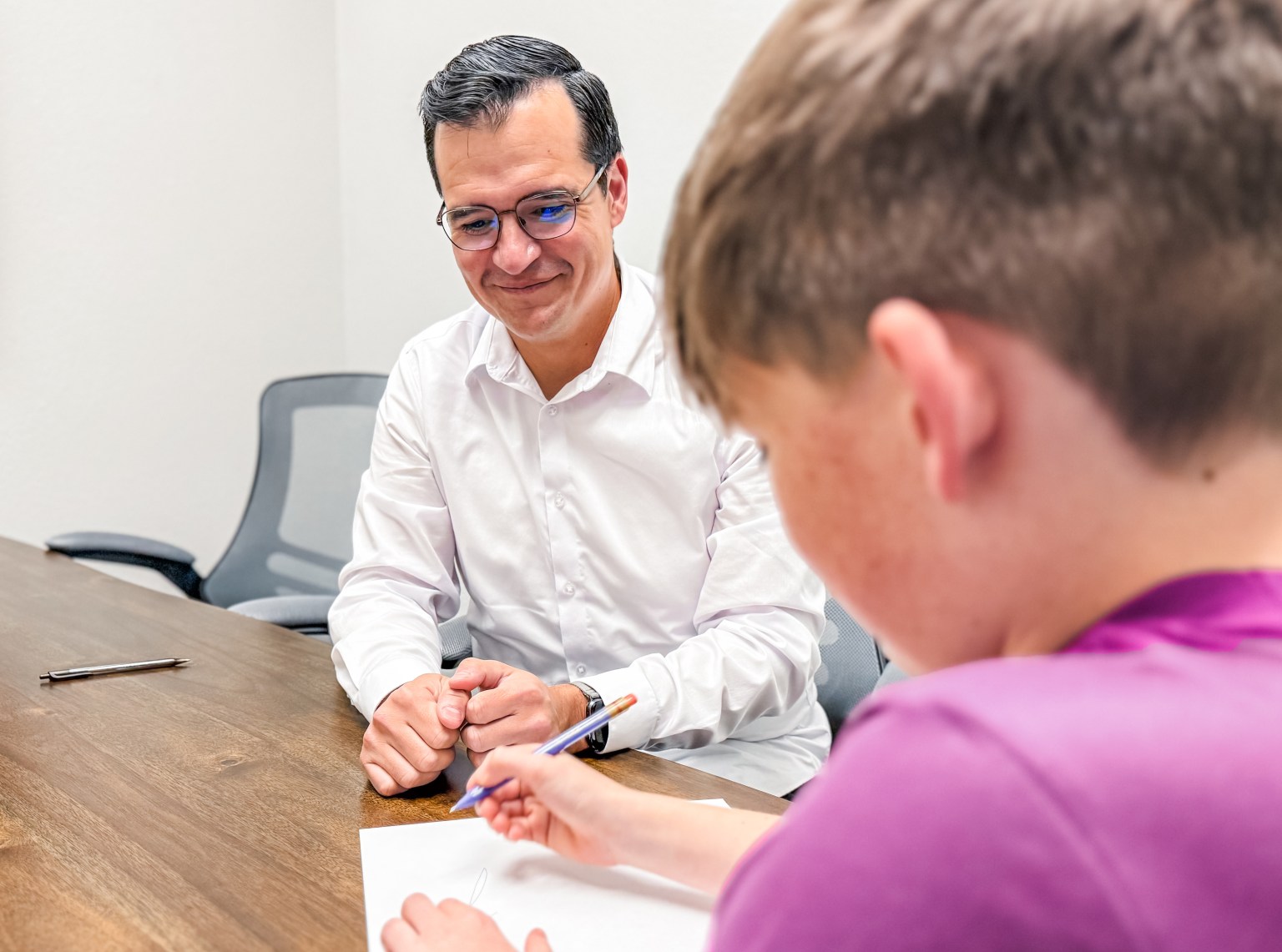
- Currently completing supervised clinical training toward the Certified Academic Language Therapist (CALT) credential issued by the Academic Language Therapy Association (ALTA), working under the direct supervision of a CALT-Qualified Instructor.
- Pursuing a Master of Education at Southern Methodist University with a graduate specialization in Learning Therapy.
- 10 years teaching kindergarten and special education in a local school district before specializing in literacy intervention.
ALTA certification requires 200+ instructional hours, 700+ supervised practicum hours, and demonstration teaching, widely considered the most rigorous dyslexia-therapy credential in the field. This describes the field’s general requirements; it is not a claim about Michael’s personal completion status. Every session is delivered under that supervision and standard.
Want the full picture of what CALT training means? See Michael’s credentials.
Frequently Asked Questions
Take Flight & MTA: How They Relate
My child’s school uses Take Flight. How does MTA relate?
They’re sibling programs. Both MTA and Take Flight grew out of the Alphabetic Phonics work developed at Texas Scottish Rite Hospital, so your child’s school-based Take Flight instruction and Michael’s MTA tutoring share the same Orton-Gillingham foundation, sequence logic, and research base. You don’t need Take Flight specifically: you need instruction from that same evidence base, delivered one-on-one or in a small group, at a pace matched to your child. MTA is that instruction. (Michael delivers MTA; he does not deliver Take Flight and is not Take Flight-trained. The two programs are related, not interchangeable, and this page describes how they relate, not a claim to provide both.)
How is private MTA tutoring different from what my child gets at school?
School-based Take Flight instruction typically runs in a small group on a fixed school schedule. Private MTA tutoring is one-on-one (or small-group by arrangement), scheduled around your family, and paced to mastery rather than a class calendar. Many families use both together rather than choosing one over the other.
Ready to talk?
Start with a free 15-minute phone consultation: quick questions, whether this is the right fit, no obligation.
Optional: an extended consultation, $40 (45–60 minutes) to go through school records and paperwork in depth, applied toward your child’s first session when you continue.
Curious what CALT training actually means? See Michael’s credentials.